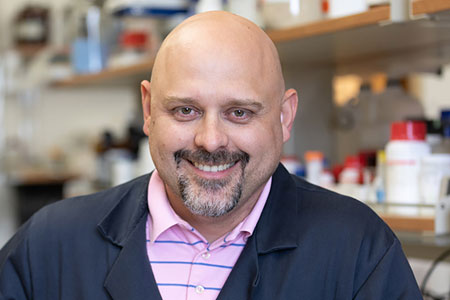
| Meet the University of Wisconsin-Madison’s Reinier Hernandez Assistant Professor of Medical Physics |
 |
Research area The Advanced Radiotheranostics Laboratory aims to harness the power of radionuclides to tackle problems in diverse areas of biomedical research. The lab focuses on developing radiopharmaceutical (theranostics) agents for molecular imaging and radiotherapy of advanced cancers. The research group is also interested in understanding the radiobiology of radionuclides to design more effective theranostic agents and explore synergistic combinations with other systemic therapies, such as DNA repair inhibition and immunotherapy.
What excites you about your work?
“Over the last decade, radiopharmaceuticals have experienced a renaissance, with the FDA approval of two agents for treating advanced metastatic neuroendocrine and prostate cancer. This renewed interest has catalyzed innovations in isotope production, imaging technologies and drug development. We are proud to be at the forefront of radiopharmaceutical (theranostics) development in the U.S. and worldwide. Our lab has developed several novel radiopharmaceutical agents targeting PSMA, CAIX and cancer lipid metabolism. We are currently spearheading the clinical translational effort toward the first-in-human testing in patients with advanced prostate cancer, renal cell carcinomas or melanomas. Witnessing the progression of these agents from idea inception to first-in-human studies has been incredibly exciting and rewarding.”
What do you hope to achieve?
“Our primary goal is to reduce mortality and improve the quality of life in patients with advanced cancer. First, we hope our agents will make a meaningful difference in the lives of patients by either curing them of the disease or enhancing their quality of life. In addition, our vision is to expand the use of these potentially life-saving technologies by generating other agents targeting high unmet clinical needs, like lung, pancreatic or brain cancer. We firmly believe that radiopharmaceuticals will solidify as one of the main pillars of cancer treatment. Finally, because of their unique theranostic capacity, many of our agents will have diagnostic applications, helping physicians identify, assess and treat disease more effectively. In fact, theranostics is at the center of personalized medicine.”
Reinier is at the forefront of the development of radiotherapeutics working in his lab and together with WARF Therapeutics.
– Rafael Diaz, WARF, Licensing Manager
Want to learn more?
Rafael Diaz, [email protected], 608.960.9847