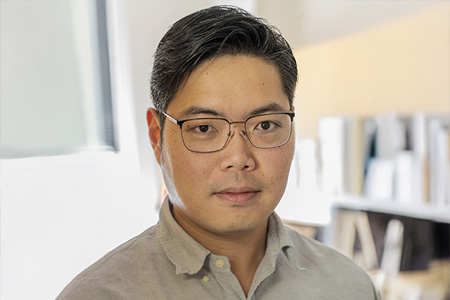
| Meet the University of Wisconsin-Madison’s Ci Ji Lim Assistant Professor of Biochemistry |
 |
Research area The long-term goal of the Lim research group is to understand how mammalian telomeres safeguard the genome. To achieve this, the group aims to achieve a multidimensional understanding of the mechanisms governing telomere DNA replication and maintenance in humans. This encompasses a mesoscale comprehension of telomere chromatin’s structure and function, as well as an in-depth understanding of the molecular intricacies of telomere macromolecular assemblies and functions.
What excites you about your work?
“My lab studies how the chromosomes in human systems are being managed or maintained. We study this complicated process in an interdisciplinary way, using a range of techniques: biochemistry, cell biology, biophysical techniques and enzymology. We use cryogenic electron microscopy (cryo-EM) techniques to get high resolution structures of protein and nucleic acid complexes and construct 3D models of our samples. Then we test our ideas in cells, via genome editing, cell biology and cellular imaging, to see if what we learned translates into physiological functions of these protein complexes. Innovation is the focus of our research program, and while cryo-EM has revolutionized structural biology, samples are delicate and easily damaged, so we tried to come up with an economical, accessible, readily deployable way to solve this sample protection problem. When we discovered that LEA proteins’ binding mechanism to the air-water interface could provide a solution, we patented the technology with WARF.”
What do you hope to achieve?
“We’ve had a lot of fun conversations with WARF, trying to figure out how to make these more accessible for everyone. We want to get our LEA proteins out there and let people test it, to see if it can resuscitate cryo-EM projects that have failed. We have WARF seed funding to expand our technology and make it even more universal. We’re trying to produce a catalog of LEA proteins, so people can find a specific solution for their specific sample. We hope to improve the technology, make it more universal, and talk to companies, so we can put it out for people to buy at a reasonable price. We really want people to have access to this technology.”
CJ’s issues with cryo-EM sample preparation were not unique to him, and the solution he invented will have broad applicability in this method of growing use.
– Jennifer Gottwald, WARF, Director of Licensing
Want to learn more?
Jennifer Gottwald, [email protected], 608.960.9854