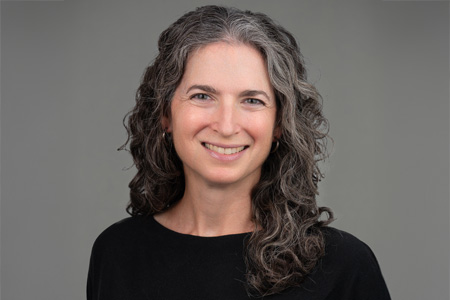
| Meet the University of Wisconsin-Madison’s Miriam Shelef Professor of Medicine |
 |
Research area Understanding how and why systemic autoimmunity develops and persists, to guide the discovery of better clinical tests and improved treatments. The lab’s two major research directions have been: 1) Define the role of citrullination and the citrullinating peptidylarginine deiminase enzymes in immunity, inflammation and rheumatoid arthritis and 2) Discover new autoantibody targets, as well as novel features of antibody and autoantibody reactivity in rheumatoid arthritis, COVID-19, systemic lupus erythematosus and other autoimmune and inflammatory diseases.
What excites you about your work?
“The basic science that we do, learning about and discovering something completely unknown, is so much fun. When we can discover things that are clinically meaningful that help with diagnosis or potentially with treatment of diseases–that is the goal. We have good treatments for rheumatoid arthritis, but a small percentage of people have really refractory disease and don’t seem to respond to available treatments. They’re a major area of interest–why is their disease so different and non-responsive, and how can we make them better?”
What do you hope to achieve?
“We’re hoping to achieve real, concrete benefits in preclinical rheumatoid arthritis. We know antibodies develop years before the development of autoimmune rheumatoid arthritis, and we need a marker of when RA is imminent. We’re trying to design a better diagnostic test, using biomarkers developed for WARF.”
Miriam’s scientific interest in the incidences of RA that don’t respond to current treatments is leading to a wider array of effective diagnostics and treatments for all afflicted with RA. She pairs biology with advanced computer analysis effectively, resulting in meaningful insights.
– Jennifer Gottwald, WARF, Director of Licensing
Want to learn more?
Jennifer Gottwald, [email protected], 608.960.9854