| Meet the University of Wisconsin-Madison’s Ahna Skop Professor of Medical Genetics |
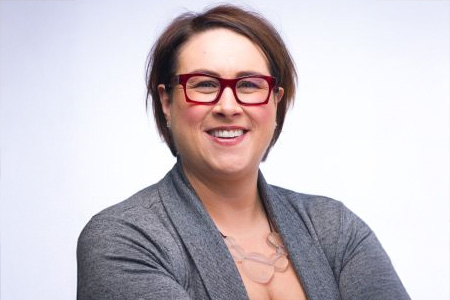 |
Research area The Skop Lab’s mission is to dissect fundamental mechanisms of cell division, with a focus on midbody (MB) and midbody remnant (MBR), which mediate functions essential for cell division, proliferation, pluripotency, and cell-cell communication. The research group’s curiosity-driven investigations are founded on the premise that mutations in midbody proteins disrupt essential cellular processes and reveal pathways central to human physiology and disease, termed ‘midbody-opathies’. The lab’s specific focus is on pathways involving midbody RNAs and proteins that are disrupted in cancer and neurodegenerative diseases.
What excites you about your work?
“I’m excited about helping people diagnose cancer in early stages–I never thought it would be a possibility in my lifetime. I also enjoy mentoring students and seeing them experience how basic science can be translated to help people with cancer–and how hard you have to work to get there. I’m excited that our company has support from other local businesses and am looking forward to partnering with them–that would be a boon for the Madison and Wisconsin economies. I’m grateful to the scientists who worked on the midbody in the 1970s and 1980s and now get to lead a company based off an extremely important cellular organelle once thought to be the ‘garbage can’ of the cell.”
What do you hope to achieve?
“As an educator/scientist, I enjoy teaching and mentoring, and I ultimately want to give an experience to all levels of students–undergrads, graduate students, postdocs, and senior scientists–in which the impacts of the science we’re doing can help expand people’s lives. With the company, I ultimately hope to make an impact on first and foremost patients and also the economic development of the Madison biotech arena and state of Wisconsin on the whole.”
Ahna is one of the few researchers in the world starting to uncover the biology and broad applications of midbody remnants. Her early recognition of potential uses could lead to a jump in diagnostic ease and efficiency.
– Jennifer Gottwald, WARF, Director of Licensing
Want to learn more?
Jennifer Gottwald, [email protected], 608.960.9854