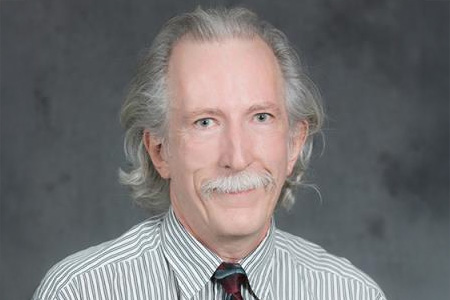
| Meet the University of Wisconsin-Madison’s Peter Muir Professor, Department of Surgical Sciences |
 |
Research area The Comparative Genetics & Orthopaedic Research Laboratory is a multidisciplinary research group focused on solving genetic and orthopaedic problems that affect animals and humans. Research areas include: the genetics of canine acquired laryngeal paralysis, the genetics of cruciate ligament rupture in dogs, the genetics of human anterior cruciate ligament (ACL) rupture, the genetics of degenerative suspensory ligament disease (DSLD) in horses, stress fracture and functional bone adaptation, as well as force platform gait analysis and client-owned animal model investigations. Standing computed tomography (CT) imaging has been a major innovation in stress fracture screening in racehorses. The research group also studies the genetics of osteosarcoma, the genetics of fibrotic myopathy and the genetics of tooth resorption in mesocephalic cats.
What excites you about your work?
“I’m currently excited about our standing CT scanning startup, Asto CT, reaching a milestone of more than 10,000 patient scans across a growing client base of equine hospitals. The technology is having a meaningful impact on the health care of veterinary patients, principally horses. It’s a great story of starting with a creative idea among faculty on campus, developing the idea into a product, and then getting the product established in the marketplace.”
What do you hope to achieve?
“My IP with WARF is in two areas. Firstly, my academic interest in vertical CT scanning is to prevent injuries in Thoroughbred racehorses affected with stress fractures. We hope to advance approaches to screening populations of racehorses to identify the small subset that is vulnerable to serious injury and enable personalized treatment to mitigate risk. There is growing evidence and interest in the idea that standing CT screening of racehorses can be quite effective at identifying the small subset of horses at elevated risk and removing them from racing, so they can get the veterinary care to enable bone healing and enable an ongoing successful athletic career without serious injury. High-speed falls are dangerous to both racehorses and riders, so work that addresses injury prevention in racehorses also reduces human injury. We also have IP with WARF pertaining to genetic risk testing in dogs, principally for cruciate ligament rupture. The genetic architecture and risk of ACL rupture is shared between humans and dogs, and the disease is heritable and polygenic. We’re interested in how genetic screening could help identify both dogs and humans with elevated risk of ACL injury. It’s exciting—advances in canine research have triggered more investigation in humans. In this instance, veterinary orthopaedics is ahead of human orthopaedics.”
Prof. Muir is innovating veterinary diagnostics and injury prevention by understanding the root causes of fractures and ligament ruptures. His passion to bring these technologies to market to improve animal well-being is exciting, and WARF is proud to partner with Peter to advance his work.
– Emily Bauer, WARF, Director of Licensing
Want to learn more?
Emily Bauer, [email protected], 608.960.9842