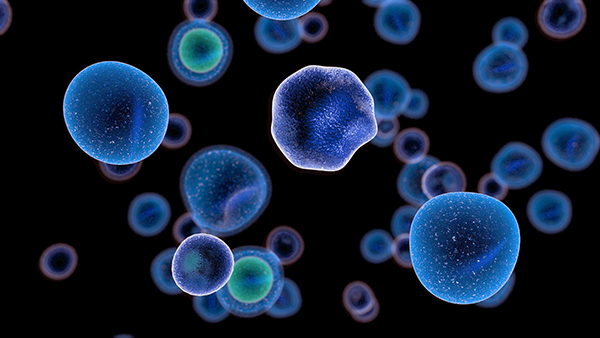
New methods and technologies developed by researchers at the University of Wisconsin-Madison aim to improve the process of producing biologic drugs — such as CAR T cells — at every stage, from the manufacturing process to therapeutic application.
T cell-based immunotherapies, including CAR T cell therapy, have shown remarkable success in treating certain cancers. However, widespread utilization of T cell-based immunotherapies has been hindered by the lack of cost-effective and efficient methods for producing clinical-grade T cell products at scale.
A new expansion and activation methodology offers a potential solution. Using this method, UW-Madison researchers significantly increased both proliferation and anti-tumor activity in two types of T cells.
“This development removes a significant bottleneck in the production of T cells for use in immunotherapy,” says Andy DeTienne, WARF director of licensing. “These technologies can reduce manufacturing costs while improving treatment efficacy.”
Enhancing the quantity and quality of T cells produced in the manufacturing process is one critical step towards making T cell-based immunotherapies scalable. Another is noninvasive quality control. A method and device developed at UW-Madison uses optical imaging technologies to sort T cells by activity level. This versatile tool could be applied to many cell-based production methodologies, including CAR T cell therapy.
In addition to refining existing processes, innovations from UW-Madison could redefine how biologic drugs — like CAR T cells — are produced. Currently, CAR T cell therapy is individualized: Each patient’s cells are extracted, modified and re-introduced to avoid immune rejection. A fusion protein which suppresses that immune response to transplant cells may make it possible to use cells other than the patient’s.
“If we were able to produce T cells that are effective in any patient, we can manufacture at scale,” says DeTienne. “Providing industry partners with technologies that enhance current autologous therapies is important for cost management, and our cutting-edge solutions that enable allogenic therapy have the potential to significantly impact patient health.”
Researchers at UW-Madison have also developed a novel way to generate modified T cells using CRISPR-Cas instead of viral vectors, which reduces the risk of genetic complications.
Together, these innovations position UW-Madison at the forefront of T cell-based immunotherapies. Addressing existing issues of efficiency, scalability and safety in CAR T cell therapy will make wider utilization possible — as well as paving the way for future applications.
To learn more about these technologies and others from UW-Madison’s immunology and biomedical engineering departments, contact Andy DeTienne at [email protected].