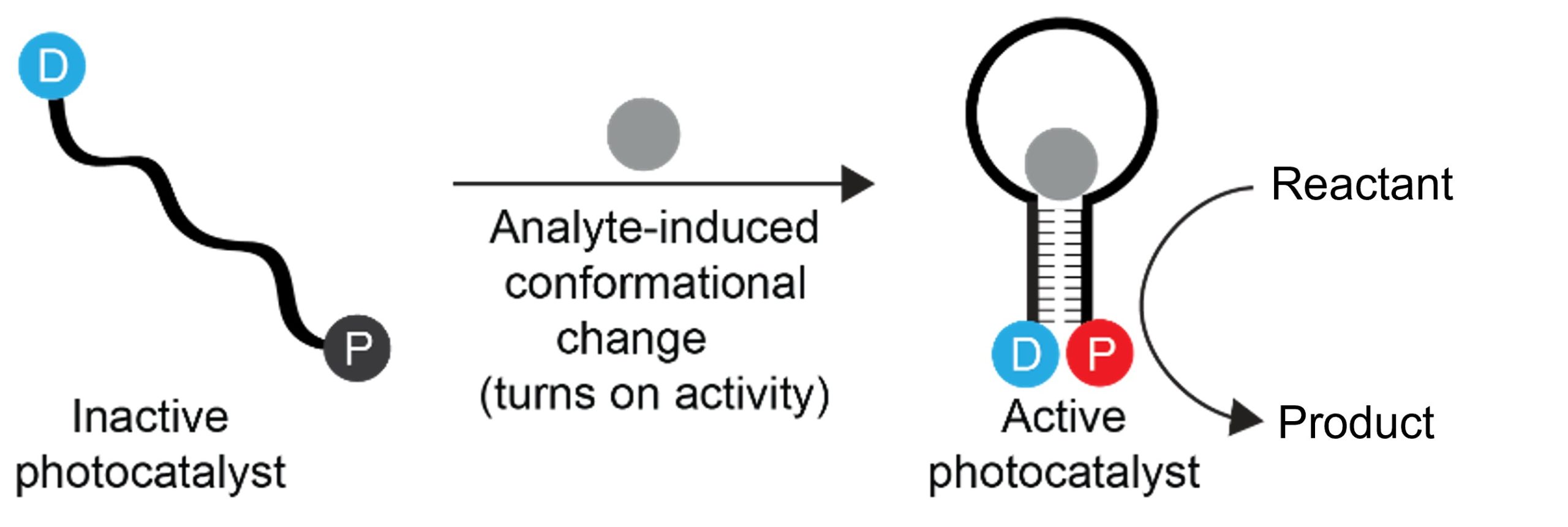
UW-Madison researchers have developed a switchable hybrid DNA-synthetic nanocatalyst that can change shape upon binding to an analyte of interest resulting in catalysis. The switchable nanocatalyst includes a synthetic photocatalyst attached to a conformationally-responsive DNA aptamer. The DNA aptamer changes shape in response to a target (e.g., analyte, complimentary nucleic acid sequence, etc.). The change in shape brings the inactive photocatalyst into proximity with a donor that activates the catalyst. The catalyst is then able to drive the desired reaction.
These switchable nanocatalysts will be compatible with a wide range of reactions, including unmasking a therapeutic agent, turning on a transcriptional pathway, generating a reactive intermediate for proximity tagging in cell biology, or generating a highly sensitive fluorescent signal. Further, given the customizable nature of nucleic acid sequences, the DNA can be “programmed” to enable compatibility with a diverse set of analytes, including ions, small molecules, proteins, and target nucleic acid sequences.
Coupling switchable DNA nanostructures with synthetic catalysts could be used in enhanced-specificity therapeutics for unmasking of prodrugs, enhancement of specificity of cell-based therapies to treat cancer, high-sensitivity luminescent signals for diagnostics, chemical biology tools for proteomic mapping, and analyte-responsive self-healing materials.