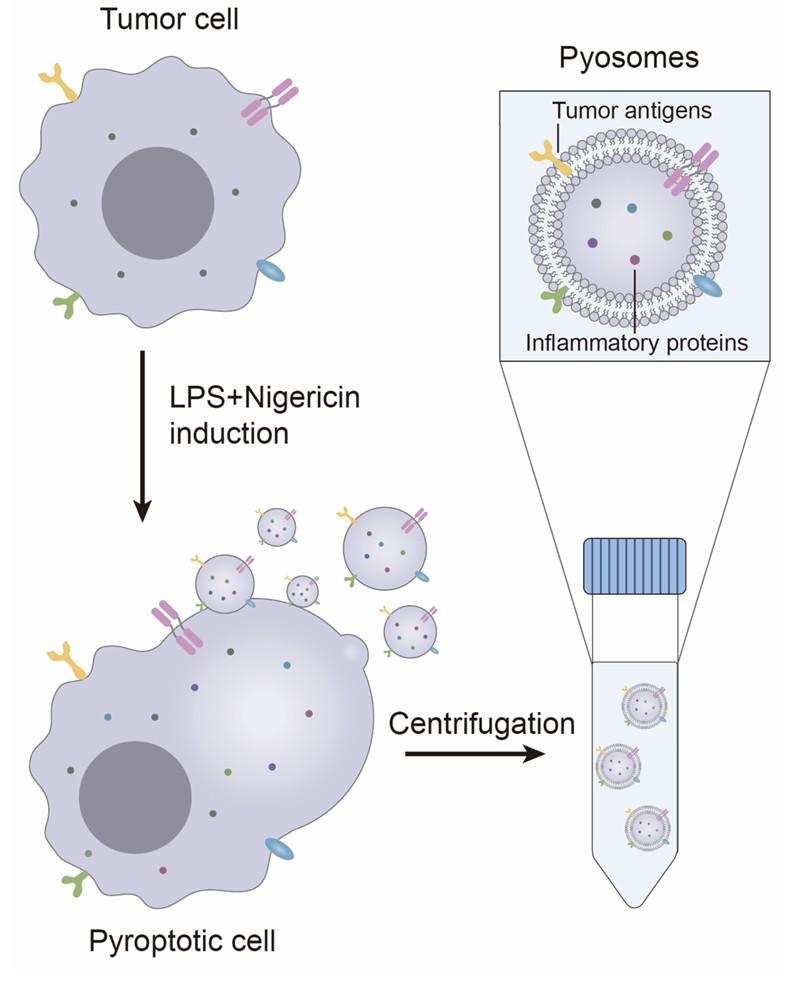
UW-Madison researchers have discovered an entirely new extracellular vesicle (EV), which they have coined pyosomes, that are formed during tumor cell pyroptosis. The inventors developed a workflow (illustrated in linked figure below) for the generation of pyosomes. Essentially, tumor cells are isolated and pyroptosis is induced, resulting in cell surface and excreted pyosomes, which are isolated via centrifugation. Importantly, the pyosomes include numerous immune-stimulating inflammatory factors and preserved tumor-associated antigens. Given the personalized nature of this approach and the resultant properties of the pyosomes, these EVs could be deployed in several important therapeutic contexts, including cancer vaccines. Initial studies have shown promise in inducing anti-tumor immune responses for certain cancer types (e.g., triple-negative breast cancer), while addressing the limitations of other EV-based approaches (e.g., immune evasion and inadvertent transfer of carcinogenic molecules to healthy cells).